
In a world where people are excited about the latest investment fad, the timeless principles from accomplished investors can be the difference between sound investing and mere gambling.
One of the smartest ways to improve your investing skills is to learn from the practices and strategies of the best investors in the world.
These are people who have generated alpha (statistically significant returns) in the market over decades and across different market cycles.
In what follows, we will consider 10 of the best investors in the world, examining their strategies, investment styles, multi-decade performance, and advice for other investors.
We have selected these 10 investors based on their popularity among the general populace, reputation among fellow investors, historical performance, and contributions to the knowledge and practice of investing.
However, this is not a ranked list, so the place where an investor appears does not convey anything about their reputation or performance compared to others in the list.
Excited? Let’s get started.
Do you want to explore the latest investment trends and the opportunities they provide? Subscribe now to Sarwa’s Fully Invested newsletter for expert insights on the global economy.
(Disclaimer: Past performance is not a guarantee of future performance. And this article is not a recommendation of any particular stock, mutual fund, or hedge fund.)
1. Warren Buffett (Berkshire Hathaway)
Overview
The ninth-richest man in the world (with an estimated net worth of $189 billion), Warren Buffett, is well known as one of the greatest investors of all time.
Having learnt the principles of value investing from his teacher, Benjamin Graham, he implemented and taught them to others.
Buffett took control of Berkshire Hathaway, a struggling textile company, in 1965 and transformed it into a holding company for diversified investments. Over the next few decades, he, alongside Charlie Munger, his best friend, made multiple smart decisions that have made him popular among retail and professional investors.
Investment style and strategies
Warren Buffett is well known for value investing. There are two main components to this investment philosophy:
- Buy wonderful companies: Buffett is a top believer in buying shares in quality companies. A look at Warren Buffett’s stock holdings (which includes popular stocks like Alphabet, Amazon, and Visa) shows that quality indicators include an economic moat (a durable competitive advantage), growing profit margins, high and growing return on equity, a low debt-to-equity ratio, and a management team committed to delivering value for shareholders, among others.
- Buy wonderful companies at a wonderful price: Buffett also ensures that he purchases these quality companies when their market price is at least 20% less than their intrinsic value. This 20% margin of safety helps to account for any error in intrinsic value calculation.
Buffett is also a firm believer in long-term ownership of quality stocks. “If you aren’t willing to own a stock for 10 years, don’t even think about owning it for 10 minutes,” he once said. A look at many of his other investment quotes shows a consistent commitment to long-term value creation rather than short-term speculation.
“Buffett belongs on any list because his edge was discipline: buy understandable businesses, insist on a margin of safety, and let compounding do the heavy lifting,” according to Ryan Woodward, the CEO of National Technical Institute, a trade education company.
Historical performance
Over the past 20 years, Berkshire Hathaway’s stock has produced an average annual return of 15.10%, according to data from Slick Charts, a financial data analytics platform. This is higher than the 11.4% returned by the S&P 500 (according to Curvo, a financial data analytics platform) over the same period.
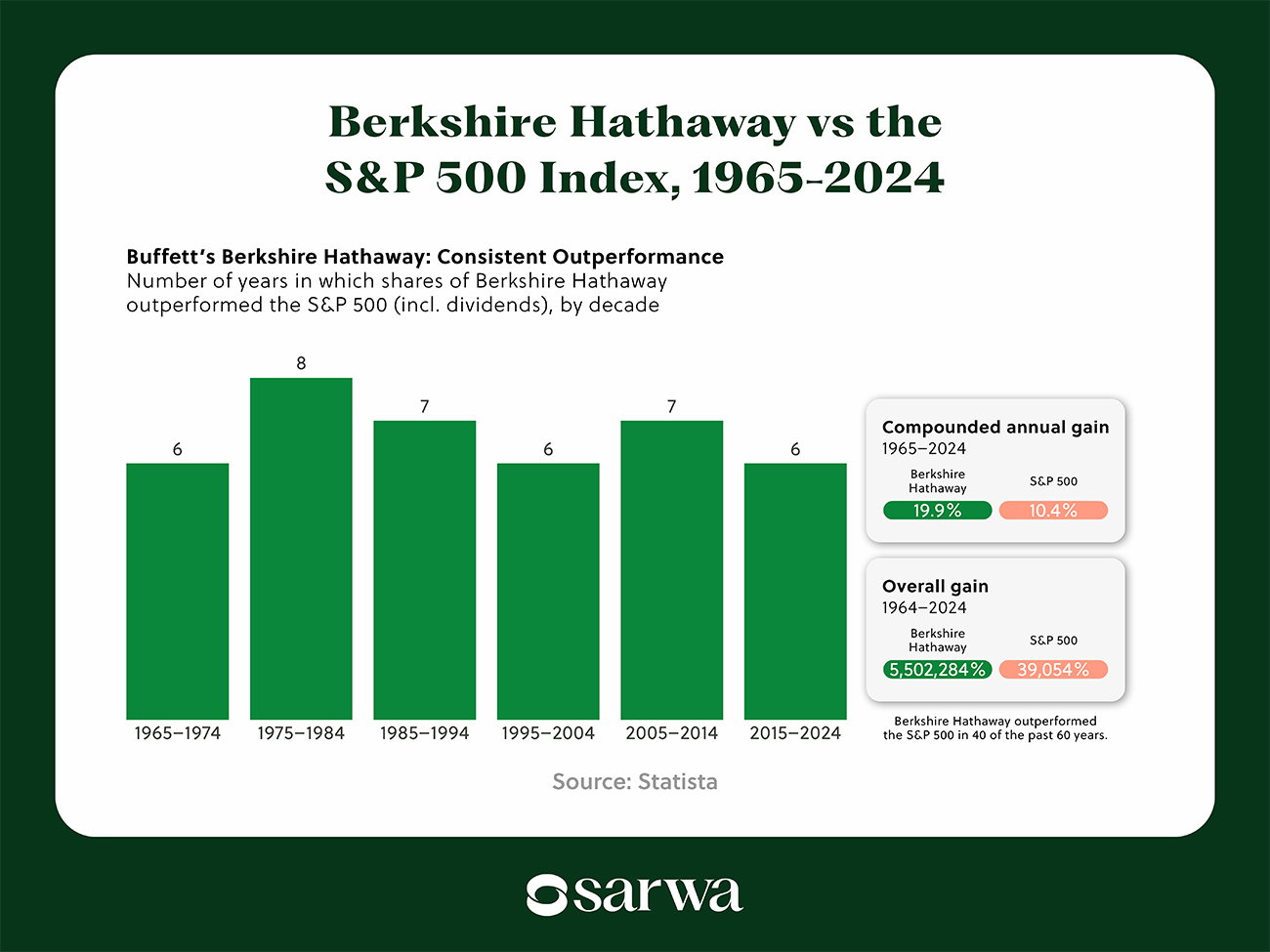
A look at Berkshire Hathaway’s track record between 1965 and 2024 tells an even more compelling story. As this chart shows, the stock has outperformed the S&P 500 Index in 40 of the 60 years, producing more than 140X of the index’s total returns within that period.
Source: Statista
Top investment tips
Below are some of Buffett’s investment tips that are most relevant to you as a retail investor:
- Be fearful when others are greedy and greedy when others are fearful: Look for opportunities to buy at a discount when the market is down and sell overvalued stocks when the market is euphoric.
- Buy wonderful companies at fair prices: Price is not enough consideration. Ensure that a stock meets certain quality standards before considering if it’s overvalued or undervalued.
- Never invest in a business you don’t understand: If you want to invest in individual stocks, ensure you understand the companies you are investing in: their business model, management team, and growth plans.
- Time in the market beats timing the market: Even the best investors cannot successfully time the market in any consistent manner. However, spending time in the market helps you benefit from its strong long-term performance.
- Invest in the S&P 500: In recent years, we have seen Buffett betting on passive investing and advising retail investors, who don’t have the skills or time to select individual stocks, to focus on investing in the S&P 500 Index through low-cost index funds.
2. George Soros (Soros Fund Management)
Overview
George Soros is a Hungarian-American billionaire known for his investment skills and philanthropic efforts. He founded Soros Fund Management in 1970 and made it one of the most successful hedge funds in the world.
Investment style and strategies
Soros embraces a global macro investing strategy, which allows him to focus on large-scale trends in exchange rates, interest rates, and inflation rates.
He gained worldwide attention when his Quantum Fund shorted the British pound in 1992, making over $1 billion in a single day from the trade.
Soros also believes in taking high-conviction trades where asymmetric opportunities exist instead of fixating on diversification.
He was a big advocate of the reflexivity theory, where market participants’ biases influence fundamentals and create self-reinforcing booms and busts.
Historical performance
Soros’ Quantum Fund achieved an average annual return of 30% from 1970 to 2000, according to Benzinga. This is higher than the 11.3% returned by the S&P 500 Index during the same period.
Top investment tips
- The importance of human psychology: Markets are driven by perception as much as by reality, by emotions as well as by fundamentals.
- Boldness should be combined with discipline: High-conviction trades must be backed by sound analysis.
- Flexibility is crucial: Sound investors are quick to identify and react to changes in financial markets.
3. Peter Lynch (Fidelity Magellan Fund)
Overview
Peter Lynch is one of the best stock investors in the world and a popular advocate for stock picking among retail investors.
Lynch managed the Fidelity Magellan Fund between 1977 and 1990, turning the fund into one of the largest and most popular mutual funds, and cementing his place as an investment legend.
Investment style and strategies
His primary strategy is known as Growth at a Reasonable Price (GARP), which is a blend of value and growth investing. He sought to purchase companies with strong earnings growth (growth investing) but without excessively high valuations (value investing).
To this end, he prioritized the PEG (price-earnings growth) ratio as a key selection criterion.
Also, Lynch used a bottom-up approach that focused on a company’s fundamentals rather than current macroeconomic trends. This implied doing extensive research on individual stocks and employing solid quality criteria.
Historical performance
Fidelity’s Magellan Fund produced an average annual return of 29.2% during the period Lynch was the manager (which was almost double that of the S&P 500 Index), according to Guru Focus, a stock market research platform. Interestingly, the AUM of the fund also went from $18 million to $14 billion.
Furthermore, the fund outperformed the S&P 500 Index in 97 of the 156 months Lynch was the manager, according to Retirement Researcher, an investment research platform.
Top investment tips
Below are some of Lynch’s investment tips that are relevant to retail investors:
- Invest in what you know: Peter Lynch recommended that retail investors focus on companies they are aware of from their daily lives. “Know what you own, and know why you own it,” he said, in one of the all-time favorite investment quotes.
This implies that you should only invest in stocks that you properly understand.
- Look for companies with strong earnings growth and reasonable valuations: Lynch’s GARP approach shows that growth and value can be two sides of the same coin.
- Great stock ideas often come from everyday observations: Pay attention to the products and services you enjoy in everyday life, and you might end up with a list of stocks with high growth potential.
“Peter Lynch succeeded because he stayed close to what people actually use and need, and I think investors can learn from that: pay attention to essential services, not just fashionable sectors,” according to Woodward.
- The biggest gains frequently come from a small number of exceptional winners: Lynch popularized the concept of tenbaggers – stocks whose prices can 10X within a given period. Having a few of these stocks in a portfolio can produce incredible returns.
- Great businesses need time to compound: Like Buffett, Lynch believes that patience and discipline are virtues in stock investing.
4. Stanley Druckenmiller (Duquesne Capital Management)
Overview
Stanley Druckenmiller is a successful investor who was the lead portfolio manager at Quantum Fund, where he worked with George Soros. He started Duquesne Capital Management, which he ran from 1981 to 2010.
Investment style and strategies
Like most hedge fund managers, Druckenmiller adopted a global macro approach, where he positions portfolios around trends in interest rates, inflation, currencies, and geopolitics.
He also adopted an active and flexible approach that allowed him to move between asset classes. Unlike many investors, he preferred to take concentrated bets on high-conviction trades rather than seek broad diversification.
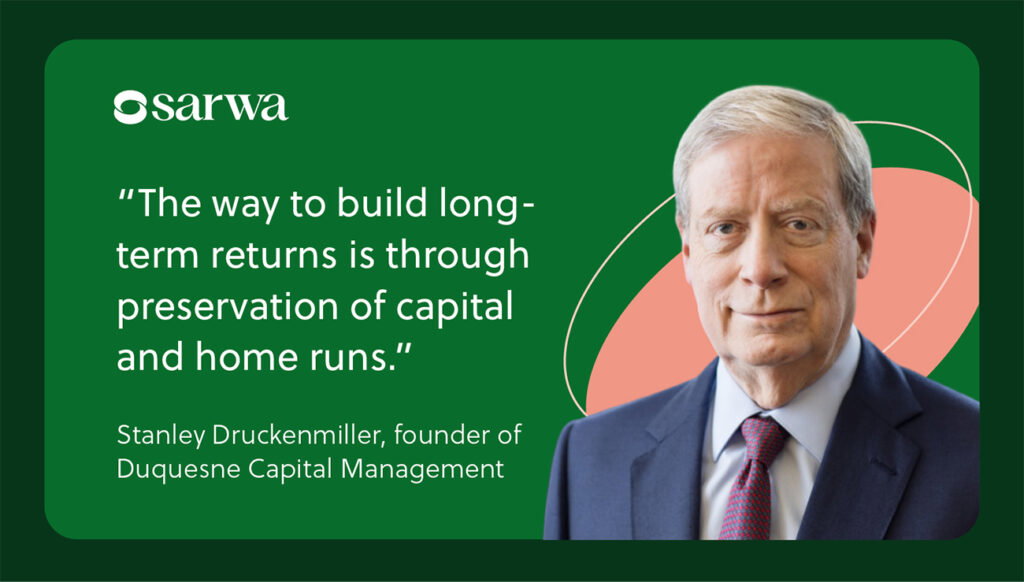
Duckenmiller is also well known for exceptional risk management and capital preservation, even in markets where others experience major drawdowns.
Historical performance
Duquesne produced an average annual return of 30.4% over 30 years (with zero down years), according to Benzinga, an investment research company.
“To put this in perspective, $10,000 invested with Druckenmiller in 1981 would have grown to over $26 million by his retirement in 2010,” they noted. “By comparison, the same amount in the S&P 500 would have reached roughly $740,000—still excellent, but nowhere near Druckenmiller’s stratospheric performance.”
Top investment tips
Since Druckenmiller was a hedge fund manager, many may consider his strategies impractical for retail investors. Nevertheless, there are some useful tips:
- You don’t need to be right all the time: As many active traders will know, no one has a 100% win rate. Thankfully, you don’t need a 100% win rate to make money from the market.
- Concentration makes money: Buffett once said that concentration is how you make money, while diversification is how you protect it. While diversification is a great principle for long-term investors to follow, active traders may benefit from concentrated bets on high-conviction trades.
- Preserve capital first; opportunities always come again: While Druckenmiller was known for his concentrated bets, he was also an excellent risk manager who put into practice Buffett’s no 1 rule: never lose money. Investors should understand that only money that is preserved can be multiplied.
5. Ray Dalio (Bridgewater Associates)
Overview
Ray Dalio founded Bridgewater Associates in 1975 and grew it into the world’s largest hedge fund. He is widely regarded as one of the most influential macro investors of all time, known for applying systematic thinking to investing and economics.
Investment style and strategies
Dalio focuses on how big-picture macroeconomic variables like interest rates, inflation, currency movements, and geopolitical shifts affect the financial markets. He also studies economic cycles and uses historical analogies to anticipate future outcomes.
He is also well known for his risk parity strategy where he seeks to balance risk across multiple asset classes rather than merely allocating capital.
Dalio is also popular for his principles-based and systematic approach to investing. He codifies decision-making into simple rules (codified in his book, Principles) so that he is not subject to emotional bias.
Furthermore, he popularized the all-weather portfolio, a portfolio designed to produce stable returns across various economic cycles and market conditions.
Historical performance
Between 1975 and 2023, Bridgewater Associates produced $55.8 billion in net gains to investors, according to LCH Investments’ 2023 Great Money Managers survey, reported by Hedge Fund Journal, a magazine focused on the hedge fund industry. This made it the fourth most profitable hedge fund at this time.
Bridgewater’s Pure Alpha strategy posted a 33% return in 2025, its highest annual return over, according to Reuters, outperforming the S&P 500 Index (which returned 16.97% within the same period).
Top investment tips
- Be open-minded: Investors should be willing to embrace new information, learn from their mistakes, and refine their processes.
- Diversification is the closest thing to a free lunch: Investors can reduce portfolio risk and potentially increase their risk-adjusted returns by adding assets with low correlation to existing assets in their portfolio.
- Understand economic cycles: Understanding the economic cycles and making investment decisions based on them is better than trying to predict the markets.
6. Nick Sleep (Nomad Investment Partnership)
Overview
Nick Sleep is another one of the best stock investors in the world who has been compared to Warren Buffett and Charlie Munger. He co-founded Nomad Investment Partnership in 2001 with Qais Zakaria and was actively involved till they closed the fund in 2014 to focus on charity work.
Investment style and strategies
Like Buffett, he emphasized the importance of long-term compounding, patience, discipline, and the selection of quality companies.
He also made much of buying only a handful of stocks and holding them for many years, as well as choosing companies that are run by the founders or at least management teams in alignment with shareholders.
Nevertheless, he believed that only companies creating value for customers could consistently create value for shareholders.
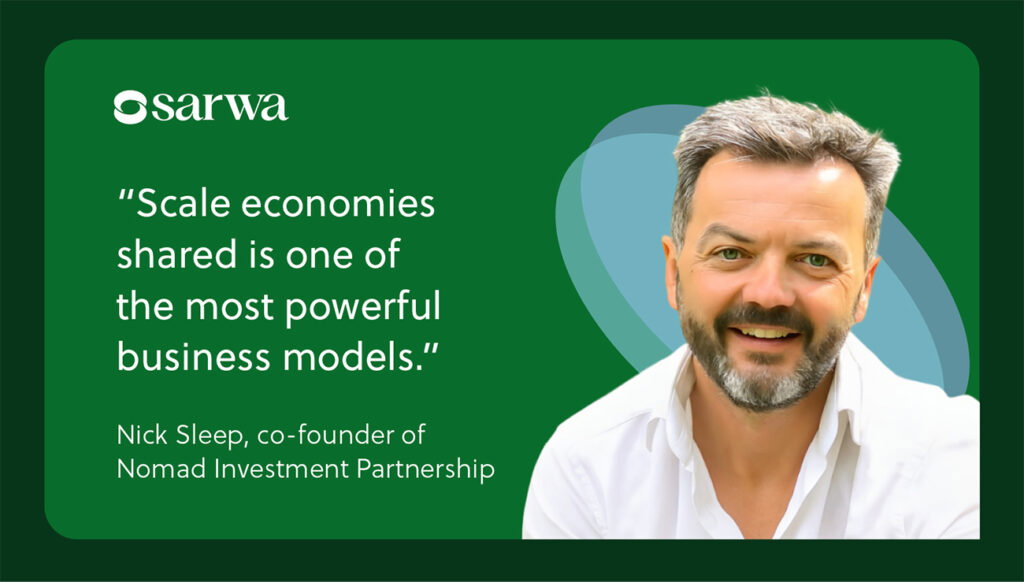
“Nick Sleep stands out to me because his framework was about scale economics shared: back businesses that reinvest advantages into lower prices, better service, and stronger customer loyalty,” according to Michael J. Spitz, the founder of Spitz CPA, an accounting firm.
Historical performance
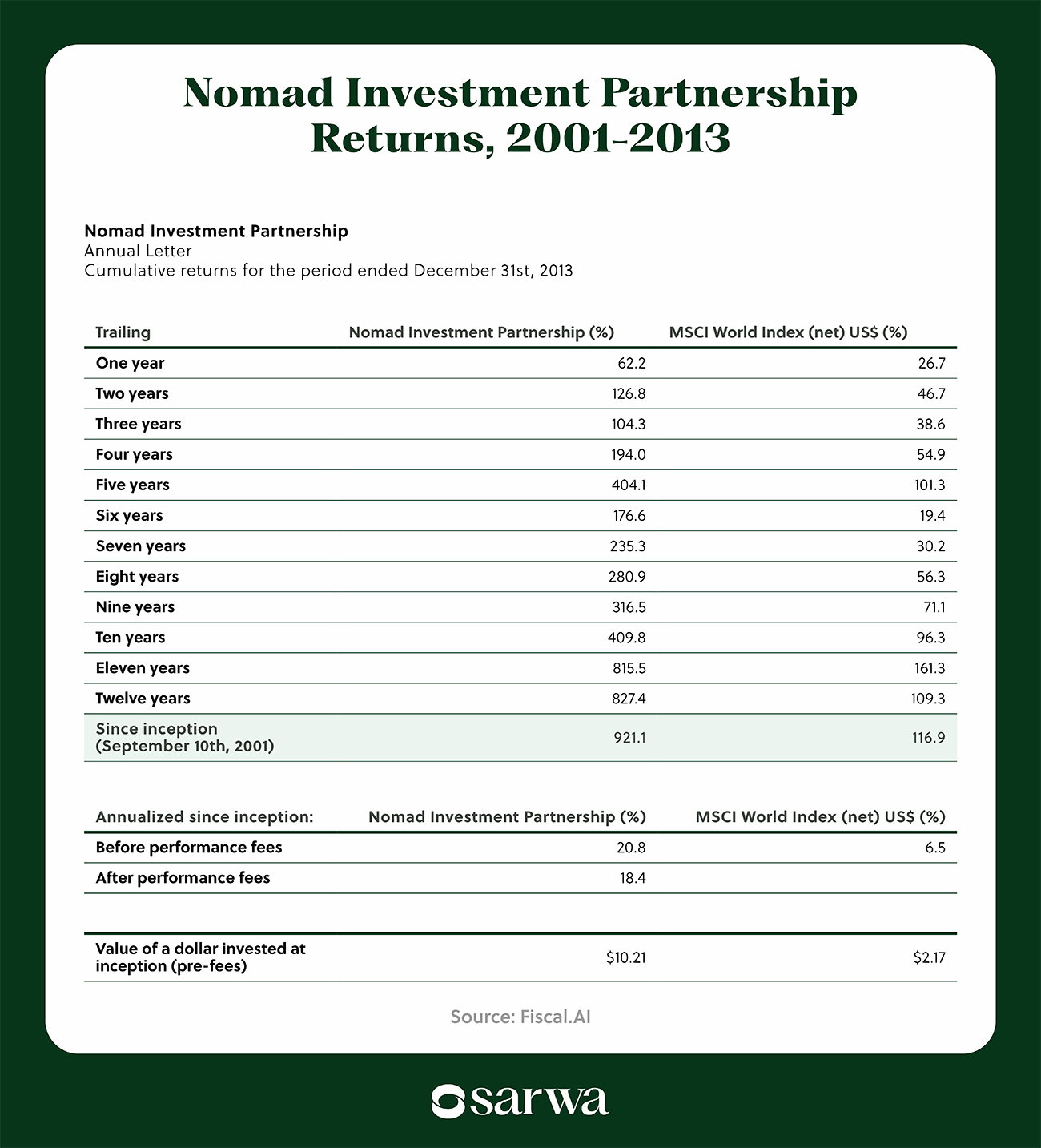
Between 2001 and 2013, Nomad Partnership produced 18.4% average annual returns for investors, according to Fiscal.ai, an investment research platform. This is almost 3X of the 6.5% delivered by the MSCI World Index, as seen below:
Source: Fiscal.AI
Top investment tips
Some of the investment tips from Sleep’s approach include:
- The best businesses share their success with customers: Only companies that are customer-centric can deliver value for shareholders.
- Time is the friend of the wonderful business: Wonderful companies grow over time and share that growth with shareholders.
- Great companies compound quietly: As Buffett once said, the greatest stock market moves are not necessarily exciting.
7. Chase Coleman III (Tiger Global Management)
Overview
Chase Coleman III is an American billionaire investor. He founded Tiger Global Management, one of the most popular hedge funds, in 2001.
Tiger Global Management started with a focus on public equities before it shifted to private technology investments, backing popular companies like Meta, LinkedIn, Spotify, among others.
Investment style and strategies
Coleman focuses on high-growth technology companies with scalable business models across the global economy.
He makes concentrated bets in companies with an economic moat, whether through the public market or through private market venture capital.
Historical performance
Tiger Growth’s portfolio has delivered 340.80% over the past 10 years (as of June 1, 2026), according to Stock Circle, a stock research platform. This is higher than the 306% delivered by the S&P 500 Index over the same period.
Top investment tips
What can we learn from Coleman? Below are a few relevant tips:
- Focus on founder-led companies: Coleman prioritizes founder-led companies with strong execution and vision.
- Patience and discipline are key: Though he makes concentrated bets, he does so in companies with economic moats and sustainable business models.
- The importance of technology in reshaping industries: As a top technology investor, Coleman believes that the best opportunities in the market come from understanding how technology reshapes industries.
8. Bill Ackman (Pershing Square Capital Management)
Overview
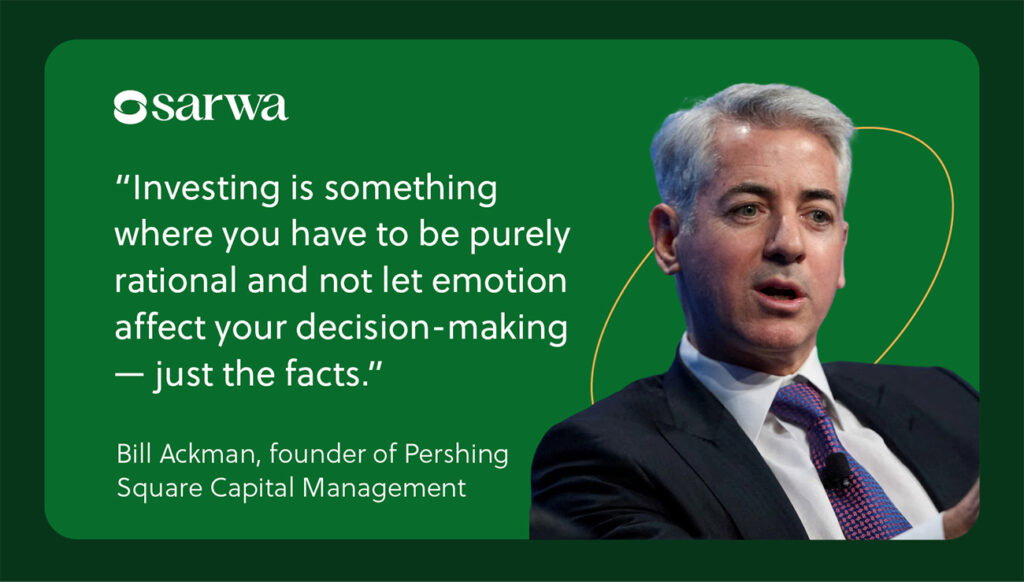
Bill Ackman is the founder of Pershing Square Capital Management and one of the world’s most famous activist investors. He has built his reputation by taking concentrated positions in a small number of companies and actively engaging with management teams to unlock shareholder value.
Investment style and strategies
Ackman is known for his activist investing style, where he buys significant stakes in underperforming companies and then pressures management to make strategic changes that will transform them.
Like Druckenmiller, he makes concentrated bets in a handful of companies. These are usually companies with strong fundamentals that are currently facing some crises or difficulties. This makes him a value-oriented and contrarian investor.
Given this approach, Ackman is a long-term investor, who is willing to stay the course as the fundamentally sound company overcomes its crises and continues on its growth trajectory.
Historical performance
Pershing Square Capital Management produced an annualized return of 16.9% between Q1, 2007 and Q2, 2026, according to data from Stock Circle. This is higher than the 10.3% annualized return of the S&P 500 Index within the same period.
Top investment tips
- Concentrate capital in your best ideas: Diversification may preserve wealth, but it is concentration that builds it.
- Invest with a multi-year time horizon: The best trades take time to unfold.
- Focus on downside protection: Concentrated bets that are not hedged will quickly lead to massive losses. Risk management is especially necessary for investors who make concentrated bets.
- Have the conviction to act when opportunities arise: Sometimes, opportunities come but once.
9. David Tepper (Appaloosa Management)
Overview
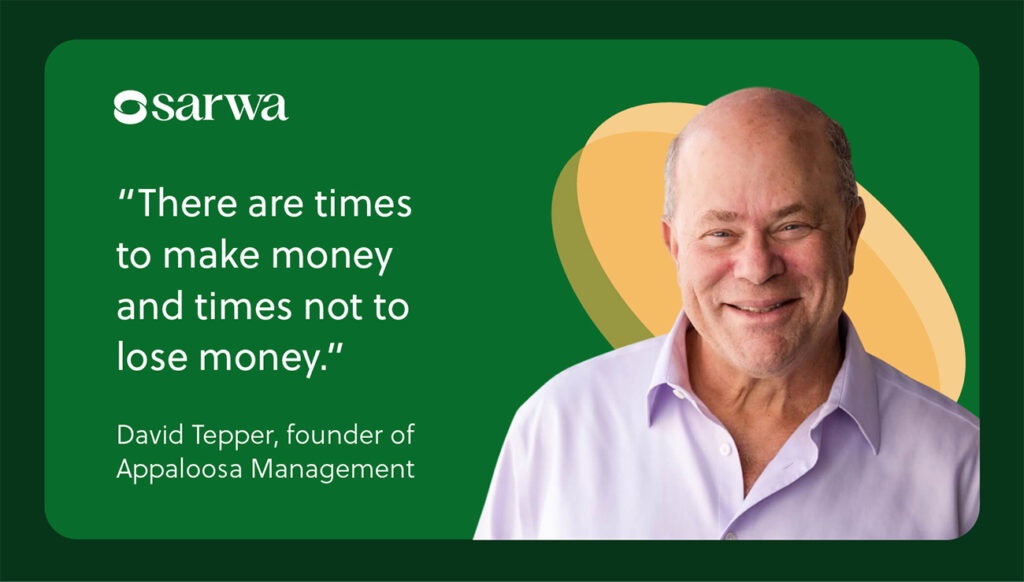
David Tepper is a hedge fund manager who is considered one of the best investors in the world.
He founded Appaloosa Management in 1993, after working at Goldman Sachs, and built it to a $18 billion firm.
Investment style and strategies
Tepper is well known for his contrarian investing style. He purchases distressed bonds, undervalued stocks, and assets in out-of-favor sectors.
Many will say he is the perfect embodiment of Buffett’s principle to be fearful when others are greedy and be greedy when others are fearful.
As a hedge fund manager, Tepper also embraces a macro approach, where he times investment decisions based on an analysis of interest rates, credit spreads, and central banks’ policies.
Tepper is also popular for taking high-conviction positions, though with sound risk management, just like Druckenmiller.
Historical performance
Appaloosa has produced an average annual rate of 28% since its launch in 1993, according to Bram Berkowitz, a market analyst at Motley Fool, a financial education and research platform.
This is more than 2X of the 10.53% return of the S&P 500 Index during the same period.
Top investment tips
Some of the investment tips we can pick from Tepper include the following:
- Buy when there’s blood in the streets: Market downturns provide opportunities to pick up quality stocks at discounted prices.
- Focus on risk-reward asymmetry: The goal is to seek trades with big upside and limited downside.
- Flexibility is key: Markets change, and smart investors adapt to new realities.
10. Howard Marks (Oaktree Capital Management)
Overview
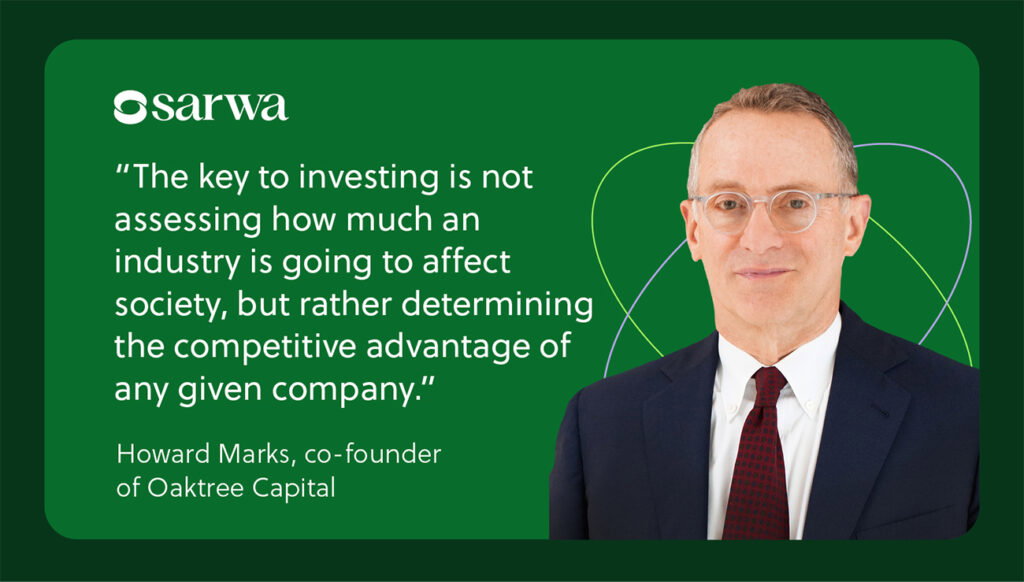
Howard Marks co-founded Oaktree Capital in 1995. The investment firm has grown to more than $180 billion in net assets, with a focus on credit, private equity, and real assets.
Investment style and strategies
Like Tepper, Marks embraces contrarian investing, buying undervalued securities when financial markets are gripped by fear.
He also times his investments based on where markets are in the boom-bust cycles, even as he embraces sound risk management. Marks is one of those who, in alignment with Buffett, believes that managing risk is even more important than chasing returns.
“Howard Marks built Oaktree by obsessing over risk before return — understanding what you don’t know matters more than what you do,” said Mike Erickson, founder of AFMS, a supply chain and logistics consulting company.
Historical performance
As of June 1, 2026, Oaktree Capital’s portfolio has returned 361.14% over the past 10 years, according to Stock Circle. This is higher than the 306% returned by the S&P 500 Index over the same period.
Top investment tips
Some of the top tips from Marks include:
- Prioritize risk management: Avoiding losses is the foundation of compounding.
- Patience and discipline are necessary: Only those who are patient and disciplined can spot opportunities when others panic.
- Understand investor psychology: A knowledge of how investors behave can help you build wealth from the market.
Other honorable mentions: Terry Smith (Fundsmith LLP), Mohnish Pabrai (Pabrai Funds), Seth Klarman (Baupost Group), Jim Simons (Renaissance Technologies), and Michael Burry (Scion Asset Management).
How to invest money in the UAE
The best investors in the world are excellent stock pickers who have succeeded at analyzing stocks and choosing the right time to buy the quality ones.
If you have the time or skills to also conduct stock market fundamental and technical analysis, you can execute some of their tips by embracing an active investment approach.
As a UAE resident, you can do this on Sarwa Trade. With it, you can create a portfolio of stocks, ETFs, cryptocurrencies, and stock options that matches your investment goals.
However, if you don’t have the time or skills to create and manage a portfolio, you can invest in a diversified and personalised portfolio of ETFs created for you by Sarwa’s wealth advisors (employing the best insights in portfolio management) via Sarwa Invest.
Are you ready to implement the investment tips of the best stock investors in the world? Sign up now for Sarwa to execute an active or passive investment strategy in the UAE.
Takeaways
- Across legends like Warren Buffett and Terry Smith, long-term compounding, not market timing, is the most consistent driver of wealth creation.
- From value investing (Buffett), global macro (George Soros, Stanley Druckenmiller), to growth tech (Chase Coleman III), all successful investors combine a clear edge with strict discipline.
- Investors like Howard Marks and Druckenmiller show that avoiding major losses is often what enables extraordinary long-term performance.
- Whether it’s Buffett’s “buy wonderful companies” or Peter Lynch’s “invest in what you know,” success comes from simple rules applied with patience and consistency.